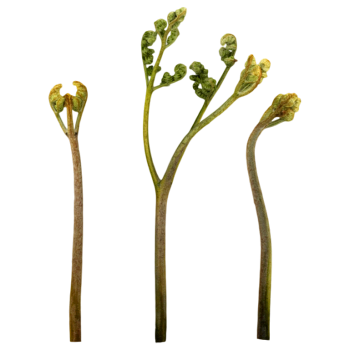
Western Fern

Western Fern

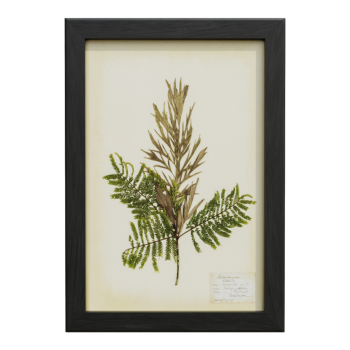
"Western fern", scientific name Pteridium aquilinum (linnai) Kuhn subsp. aquilinum, is a large perennial herbaceous fern of the genus fern (Pteridium) of the fern family (Pteridophyta), the true fern class (Filicopsida), the fern family (Filicales), the fern family (Pteridiaceae). It is one of the most common wild ferns in temperate to subtropical regions of the northern hemisphere, with both ecological value and toxicity risk, and carries historical literature.
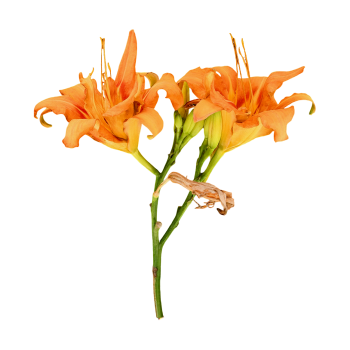
Wide-leaf Hemerocallis Flower Specimen
Wide-leaf Hemerocallis Flower Specimen

"broad-leaved Hemerocallis", whose scientific name is Hemerocallis fulva var. is a classic variety of Hemerocallis. It has become one of the most representative ornamental plants in east Asia with wide leaves, gorgeous inflorescences and profound cultural implication, and has both medicinal and ecological value. Originated in China (the Yellow River Basin to the Yangtze River Basin), the Korean Peninsula and Japan; now widely cultivated in the global temperate to subtropical regions (such as Europe, America, Southeast Asia). It likes sandy loam with sufficient sunshine (resistant to half shade) and good drainage (avoid low-lying water accumulation), suitable for pH 6.0-7.5; Drought tolerance and barren tolerance.
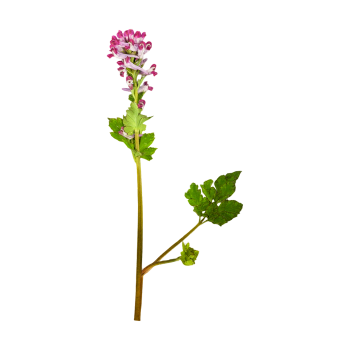
Engraved Leaf Corydalis Specimen

Engraved Leaf Corydalis Specimen
"Corydalis vitae", scientific name Corydalis incisa Pers., is a perennial herb of the genus Corydalis (Corydalis) in the poppy family (Papaveraceae). Its leaves have deep-split texture and flowers are lavender or blue-purple. It is a common wild herb in East Asia and has both medicinal value and ecological significance.
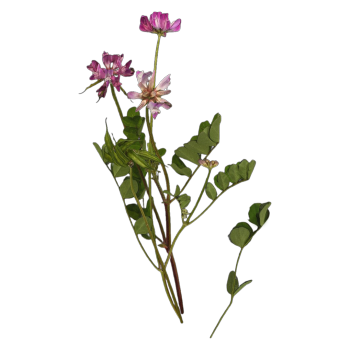
Purple Cloud English Specimen

Purple Cloud English Specimen
Ziyun Ying is an annual or over annual herb of the Astragalus genus in the legume family; Enlarged roots and well-developed fibrous roots; The stem is light green or light purple red, soft and hollow; The leaves are odd feathered compound leaves, green or light green; The flowers are umbels with colors ranging from light purple red to purple red, occasionally white; The pods are slender and have a triangular cross-section; The seeds are kidney shaped, shiny, and yellow green in color; Flowering period from February to April; The fruiting period is from March to May.
Wild chrysanthemum specimen

Wild chrysanthemum specimen

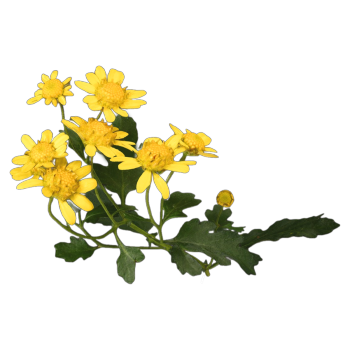
Wild chrysanthemum is a perennial herbaceous plant belonging to the Asteraceae family, with underground creeping stems and sparsely hairy stems and branches; The central stem and leaves are ovate, elongated ovate, or elliptical ovate in shape, with light green on both sides; The flowers are arranged in dispersed umbrella shaped or umbrella shaped inflorescences, with white brown edges and yellow tongue shaped flowers. The flowering period is from June to November.
Iron holly fruit specimen

Iron holly fruit specimen

Iron holly is an evergreen tree or shrub of the holly family and genus, with gray branches, angular branches, and reddish brown color; Leaves alternate, oval to elliptical in shape, with a glossy surface on top; Flowers are unisexual, dioecious, with umbels, oval shaped, small female flowers, and thick stems; The drupe is spherical to elliptical in shape and turns red when ripe; The flowering period is from May to June, and the fruiting period is from September to October. Due to its deep green leaves, purple tender branches, and bright red fruits, it is called "Wan Zi Qian Hong" in garden applications. Iron holly is distributed in North Korea, Japan, Vietnam, and China. Most regions in China, such as Jiangsu, Anhui, and Jiangxi, have cultivation.
Huang Qiuying specimen

Huang Qiuying specimen

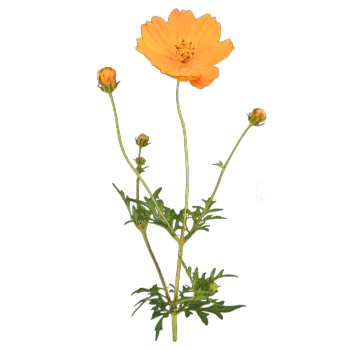
Huang Qiuying is an annual herbaceous plant of the Asteraceae family. The branches and leaves are paired bipinnate compound leaves with lanceolate lobes; The flowers are tongue shaped, with two types: single and double. The colors are mostly yellow, golden, orange, and red; Skinny fruit brown in color; The flowering period for spring sowing is from June to August, and for summer sowing it is from September to October; Also known as "sulfur chrysanthemum", it is named after its golden color, resembling a mineral called sulfur. Native to Mexico, it can naturally grow in alkaline soil areas below 1600 meters above sea level. Prefer warmth, not cold resistant, avoid extreme heat. Likes light, drought resistant and thin, prefers sandy soil with good drainage. Avoid strong winds and plant in a leeward location.
Rat grass specimen

Rat grass specimen

Squirrel grass is an annual herbaceous plant in the Asteraceae family, belonging to the genus Squirrel grass. The stem is upright with creeping branches at the base, covered in thick white cotton hairs; Using leaves as medicine; The flowers are yellow or pale yellow, with golden or lemon like bracts, yellow in color, membranous, and glossy; The fruit is cylindrical in shape with an inverted or inverted egg shape. The flowering period is from January to April, and the fruiting period is from August to November. The Rat's Nest Grassland is native to southern Africa and is currently distributed in China, North Korea, the Philippines, Indonesia, the Indochinese Peninsula, and India; Distributed in various provinces and regions in China, including Taiwan, East China, South China, North China, Northwest, and Southwest.
Houttuynia cordata specimen

Houttuynia cordata specimen

Houttuynia cordata is a medicinal herb included in the Chinese Pharmacopoeia, sourced from the dried aboveground parts of the three white grass family plant, Houttuynia cordata. In summer, when the stems and leaves are lush and the flowers and ears are abundant, they should be harvested, removed of impurities, and dried in the sun. The stem is flattened cylindrical, twisted, and 20-35cm long; The surface is brownish yellow, with several longitudinal edges, obvious nodes, and residual fibrous roots on the lower nodes; Crispy and easy to break. Leaves grow alternately, with rolled and wrinkled leaves that flatten into a heart-shaped shape, measuring 3-5cm in length and 3-4.5cm in width; Sharp apex, entire margin; The upper surface is dark yellow green to dark brown, and the lower surface is gray green or gray brown; The petiole is slender, and the base forms a sheath like structure with the supporting leaves. When crushed, it has a fishy odor.
Honeysuckle specimen

Honeysuckle specimen

Honeysuckle, officially known as honeysuckle. The name 'Honeysuckle' comes from the Compendium of Materia Medica. Due to the fact that honeysuckle flowers initially turn white and then turn yellow, they are named 'Honeysuckle'. The medicinal herb Honeysuckle is a plant of the Lonicera genus in the Lonicera family, as well as dried flower buds or flowers with initial blooming in the same genus. Honeysuckle flowers bloom in March, with five blooms and a slight fragrance. The stems are red, and the flowers turn white when they first bloom. After one or two days, they turn yellow, hence the name honeysuckle. Also known as the Mandarin Duck Vine, it has one stem and two flowers, with two stamens protruding outward, forming pairs that are inseparable, resembling male and female companions, as well as mandarin ducks dancing together.
Specimen of Dahua Pill

Specimen of Dahua Pill

Lilium grandiflorum is a variety of lemon lily belonging to Liliaceae. It is a rhizomatous perennial herb with spherical bulbs, scattered leaves, narrow lanceolate leaves, racemes, and few single flowers; Bracts leaf shaped, lanceolate, long peduncles, drooping flowers, rolled petals, red with purple spots, papillate protrusions on both sides of nectaries, filaments, hairless, anthers orange red; Ovary cylindrical, flowering period from July to August. Distributed in Japan, North Korea, Russia (Far East region), and China; Distributed in Northeast, North China, Shaanxi and other places in China. Growing in sandy valleys below an altitude of 1290 meters.
Specimen of Spartina alterniflora

Specimen of Spartina alterniflora

Toothed Leaf Ash is a plant of the Hydrangeaceae family and the Ash genus. Shrubs, 1-3 meters high; The flower branches are 8-12 centimeters long. Leaves papery, ovate or ovate lanceolate, petiole 3-8 mm long, sparsely covered with stellate hairs. The inflorescence is 5-10 centimeters long, with many flowers sparsely covered with star shaped hairs; Flower buds are oblong in shape; Crown diameter 1.5-2.5 centimeters; The flower stem is 3-5 millimeters long; Calyx tube cup-shaped, lobes ovate, densely covered with yellow brown star shaped hairs along with the flower stem and calyx tube; The petals are white, narrowly elliptical in shape, with a sharp apex and a narrowed base. The outer surface is covered with star shaped hairs, and the flower buds are arranged in a closed manner inward; The outer stamen is 8-10 millimeters long, while the inner stamen is shorter; Anthers are oblong in shape.
Milk sample

Milk sample

Milk seed is a deciduous shrub belonging to the Euphorbia genus in the Euphorbia family. Branches with thorns, small branches very open, densely covered with silver white and yellow brown scales when young; Leaves are papery or membranous, ranging from elliptical to ovate elliptical or ovate lanceolate in shape, with a pure pointed tip and a rounded or wedge-shaped base. They have white star shaped hairs or scales when young, and are densely covered with silver white and a small amount of brown scales below; Flowers bloom before leaves, yellow white, fragrant, densely covered with silver white shield shaped scales; The fruit is nearly spherical or oval in shape, green when young, covered with silver white or brown scales, and red when mature. The flowering period is from April to May, and the fruiting period is from July to August.
Labrador Duxiang specimen

Labrador Duxiang specimen

Labrador Juniperus evergreen shrub, short, branched, containing resin. Leaves with short stalks, leathery, narrow and round, entire margin, curled edges, rust brown or soft hairs below. The flowers are small, white, and have multiple flowers forming a terminal umbel like inflorescence; The base of the flower stem has bracts; The corolla is white, the filaments are filamentous, the ovary is ovoid, covered with scales, the capsule is elliptical, and there are many seeds. The seeds are small, the outer seed coat is loose, and the endosperm is fleshy. Distributed in North America, in the Labrador Peninsula of Canada, it uses Labrador Du Xiang as a substitute for tea, hence also known as Labrador tea. Labrador Duxiang is one of the subspecies of Duxiang. Belonging to shrubs or dwarf shrubs, with upright or upward or outward leaning stems.
European Blood Activating Pill Sample

European Blood Activating Pill Sample

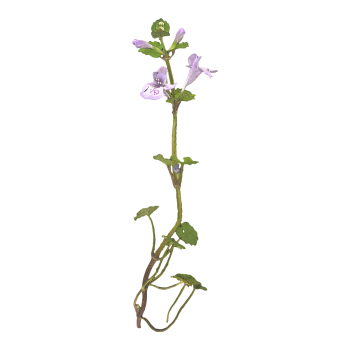
Ouhuoxue Dan is a creeping herbaceous plant belonging to the family Lamiaceae and the genus Huoxue Dan. The stem is four diamond shaped, with a light purple red base; Leaf grass texture, nearly circular; The leaves are kidney shaped or kidney shaped circular, with a heart-shaped base; Umbrella inflorescence, forming a whorl shaped structure, calyx tube shaped, corolla purple, disk cup-shaped, style slender; Mature small nuts are not seen. The flowering period is in May. Ouhuoxue Dan is native to various countries in Northern and Western Europe, and is also distributed in Xinjiang, China. Ouhuoxue Dan is resistant to yin and prefers moisture. It grows best under semi shaded conditions in the forest, but slightly weaker under full day sunlight. It prefers fertile, loose, and well drained soil. The propagation method of Ouhuoxue Dan is through cutting or division propagation.
Lily Lily Sample

Lily Lily Sample

Juandan lily is a perennial bulbous plant of the lily genus in the lily family. The bulb is wide ovate and flattened, and the scale leaves are wide ovate; The stem often has purple stripes and white hairs; The leaves are oblong lanceolate or lanceolate in shape, with nearly hairless on both sides. The leaf edges have papillary protrusions, and the upper leaf axils have bulbous buds; The bracts are leaf shaped, ovate lanceolate, with rolled petals that are orange red in color and have purple black spots. The ovary is cylindrical in shape; The capsule is narrow and oval shaped; The flowering period is from July to August. Due to its fiery red color and curled petals, it is called "Juandan".
Cang'er specimen

Cang'er specimen

Sorghum is an annual herbaceous plant of the genus Sorghum in the Asteraceae family. The stem of Cang'er is covered with gray white rough hairs; Leaves triangular ovate or heart-shaped, with irregular coarse serrations on the edges, and pale white below; The male inflorescence is spherical, with many male flowers and a bell shaped corolla. The female inflorescence is elliptical with a sac like inner layer, green, light yellow green, or reddish brown in color; Mature bracts with achenes ovate or elliptical in shape; Skinny fruit, inverted oval shape; The flowering period is from July to August; The fruiting period is from September to October. [9] Because its son is like ear nitrate, it is named "ear". After ripening, it has a green black color, that is, pale color, hence the name Cang'er.
Red Pine Flower Ball Specimen

Red Pine Flower Ball Specimen

Red pine is a tree belonging to the pine family and the pine genus. Branches form umbrella shaped tree crowns; Annual branches pale yellow or reddish yellow, slightly covered in white powder and hairless, with fine serrations on the edges; Male bulbous flowers are light reddish yellow, cylindrical in shape, clustered at the lower part of new branches in a short spike shape, while female bulbous flowers are light reddish purple; The cone is dark yellow brown or light brown yellow, oval or oval conical in shape; Seeds are inverted oval or oval shaped; The flowering period is in April; The fruiting period is from late September to October of the second year. It is named after its reddish brown bark.
Mandala pod specimen

Mandala pod specimen

Mandala, belonging to the Solanaceae family and the genus Mandala, is an annual tropical herbaceous plant with broad hairy leaves and irregular wavy shallow toothed edges; Flowers grow solitary between branches or leaf axils, upright, with short stems; The sepals are cylindrical lobes triangular in shape, with a color of white or light purple; The fruit is capsule shaped and egg shaped, with a light yellow color; Mandala blooms from June to October. The name Mandala comes from the transliteration of the Sanskrit word mandala, so it can also be called "Manchala" or "Mannara". Mandala is toxic throughout the plant and contains scopolamine, which has functions such as antispasmodic, sedative, analgesic, and anesthetic. Mandala extract is used for the treatment of heart failure, ventricular arrhythmia, and angina pectoris.
American Country Pastoral Living Room Dining Room Hanging Painting Bedroom Background Wall Mural Plant Specimen Framed Modern Decorative Painting

American Country Pastoral Living Room Dining Room Hanging Painting Bedroom Background Wall Mural Plant Specimen Framed Modern Decorative Painting

American Country Pastoral Living Room Dining Room Hanging Painting Bedroom Background Wall Mural Plant Specimen Framed Modern Decorative Painting

American Country Pastoral Living Room Dining Room Hanging Painting Bedroom Background Wall Mural Plant Specimen Framed Modern Decorative Painting

American Country Pastoral Living Room Dining Room Hanging Painting Bedroom Background Wall Mural Plant Specimen Framed Modern Decorative Painting

American Country Pastoral Living Room Dining Room Hanging Painting Bedroom Background Wall Mural Plant Specimen Framed Modern Decorative Painting

American Country Pastoral Living Room Dining Room Hanging Painting Bedroom Background Wall Mural Plant Specimen Framed Modern Decorative Painting

American Country Pastoral Living Room Dining Room Hanging Painting Bedroom Background Wall Mural Plant Specimen Framed Modern Decorative Painting